I. Introduction — Why Material Matters More Than You Think
When choosing a lunch box, most people focus on size, design, and price.
However, the most critical factor is often overlooked — the material.
The material determines not only durability, but also food safety, heating performance,
long-term hygiene, and overall user experience.
Many users have experienced frustrating problems such as glass lunch boxes suddenly
cracking,
plastic containers retaining stubborn odors, or lunch boxes deforming after repeated
heating.
These issues are often blamed on poor quality or misuse, but in reality,
they usually stem from material limitations.
Not all glass is created equal. There are significant differences in thermal resistance,
structural stability, and safety performance among various types of glass.
Understanding these differences is essential when selecting a lunch box designed
for daily use, reheating, freezing, and long-term food storage.
This is where high borosilicate glass stands apart.
Originally developed for laboratory and industrial applications,
this advanced glass material offers exceptional resistance to thermal shock,
superior chemical stability, and outstanding durability.
These characteristics make it an ideal solution for modern meal prep and daily lunch box
use.
In this guide, we will explain what high borosilicate glass is, how it differs from regular
glass,
and why it plays a critical role in creating safer, stronger, and longer-lasting lunch
boxes.
High borosilicate glass is a specialized type of glass primarily composed of
silicon dioxide (SiO₂) and boron trioxide (B₂O₃), along with smaller amounts of sodium oxide
and aluminum oxide. The inclusion of boron significantly alters the molecular structure
of the glass, delivering superior thermal and mechanical properties.
The key ingredient — boron trioxide — plays a critical role in reducing
the thermal expansion coefficient of the glass. This allows the material to expand and
contract
uniformly when exposed to temperature changes, greatly minimizing internal stress
and preventing sudden cracking.
Because of its exceptional heat resistance and chemical stability, high borosilicate glass
has long been used in laboratory glassware, pharmaceutical containers, high-end cookware,
and aerospace components — industries where material performance is non-negotiable.
B. Key Physical and Chemical Properties
Compared with ordinary glass, high borosilicate glass demonstrates a unique combination
of thermal, mechanical, and chemical advantages that make it particularly suitable
for food containers and lunch boxes:
Extremely Low Thermal Expansion Coefficient:
Reduces internal stress during heating and cooling cycles,
significantly lowering the risk of cracking.
Outstanding Thermal Shock Resistance:
Capable of withstanding sudden temperature changes of 120°C to 170°C,
allowing safe transfer from freezer to microwave or oven.
High Structural Stability:
Maintains shape and strength after repeated heating, cooling, and washing cycles.
Excellent Chemical Inertness:
Does not react with acidic, salty, or oily foods, ensuring zero taste or odor
transfer.
Lead-Free and Non-Toxic:
Safe for direct food contact and long-term daily use.
C. High Borosilicate Glass vs Regular Soda-Lime Glass
Most conventional glass lunch boxes on the market are made from soda-lime glass,
which is suitable for cold storage and light heating. However, soda-lime glass
has a relatively high thermal expansion rate, making it far more vulnerable
to thermal shock.
High borosilicate glass, by contrast, is engineered to withstand extreme temperature
fluctuations, making it vastly superior for modern cooking and food storage applications.
Property
Soda-Lime Glass
High Borosilicate Glass
Thermal Expansion
High
Very Low
Thermal Shock Resistance
Low
Very High
Freezer → Microwave
Not Recommended
Safe
Durability
Moderate
High
Long-Term Stability
Average
Excellent
This fundamental difference in material performance explains why high borosilicate glass
has become the preferred choice for premium lunch boxes, bakeware, and food storage
solutions.
III. Why High Borosilicate Glass Is Ideal for Lunch Boxes
High borosilicate glass is not just a premium material — it is a functional upgrade
that directly solves the most common problems users face with traditional lunch boxes.
From thermal performance to food safety and long-term durability,
this material delivers unmatched advantages for daily meal prep and food storage.
A. Exceptional Thermal Shock Resistance
One of the most important requirements for modern lunch boxes is the ability to handle
frequent temperature changes safely. Users routinely move containers from the freezer
to the microwave, from the refrigerator to hot water cleaning, or from room temperature
into preheated ovens.
High borosilicate glass features an extremely low coefficient of thermal expansion,
allowing it to withstand sudden temperature differences of up to
120°C–170°C (250°F–340°F) without cracking.
This makes it significantly more reliable than regular soda-lime glass,
which is far more susceptible to thermal shock.
As a result, high borosilicate lunch boxes can safely transition between
freezer → microwave → oven → dishwasher,
delivering maximum convenience without compromising safety.
B. Superior Food Safety & Chemical Stability
Unlike plastic containers, high borosilicate glass is completely
chemically inert.
It does not react with acidic, oily, salty, or spicy foods,
nor does it release harmful substances under high temperatures.
This material contains no BPA, BPS, phthalates, PFAS, or heavy metals,
and does not generate microplastics, even after repeated heating cycles.
This ensures that the food remains pure, uncontaminated,
and exactly as intended in both taste and nutrition.
For health-conscious consumers, families with children, and professional foodservice users,
high borosilicate glass represents the safest long-term solution
for daily food storage and reheating.
C. Odor-Free, Stain-Free & Hygienic Storage
High borosilicate glass has a smooth, non-porous surface that prevents
the absorption of oils, pigments, and odors.
Unlike plastic, which develops micro-scratches that trap food residues and bacteria,
glass maintains a clean, hygienic surface even after years of use.
This means no lingering smells from garlic, curry, seafood, or fermented foods,
and no permanent staining from tomato sauces, turmeric, or chili-based dishes.
The container remains crystal clear, neutral in odor,
and easy to sanitize through standard washing methods.
D. Long-Term Durability & Cost Efficiency
Although high borosilicate lunch boxes typically carry a higher upfront cost
than plastic alternatives, they offer far superior long-term value.
Their structural integrity allows them to maintain performance and appearance
for 5 to 10 years or more under normal household use.
In contrast, plastic containers often degrade within months,
developing stains, odors, warping, and surface damage that necessitate frequent replacement.
When evaluated over time, high borosilicate glass delivers
a significantly lower total cost of ownership.
For retailers, brands, and foodservice operators,
this durability also translates into reduced customer complaints,
lower return rates, and stronger brand reputation.
E. Sustainability & Environmental Responsibility
High borosilicate glass is fully recyclable, highly durable,
and does not generate microplastic pollution.
Its long lifespan reduces single-use waste and minimizes environmental impact
across its product lifecycle.
For brands committed to sustainability and responsible manufacturing,
borosilicate glass lunch boxes align perfectly with global trends
toward eco-friendly packaging and reusable food containers.
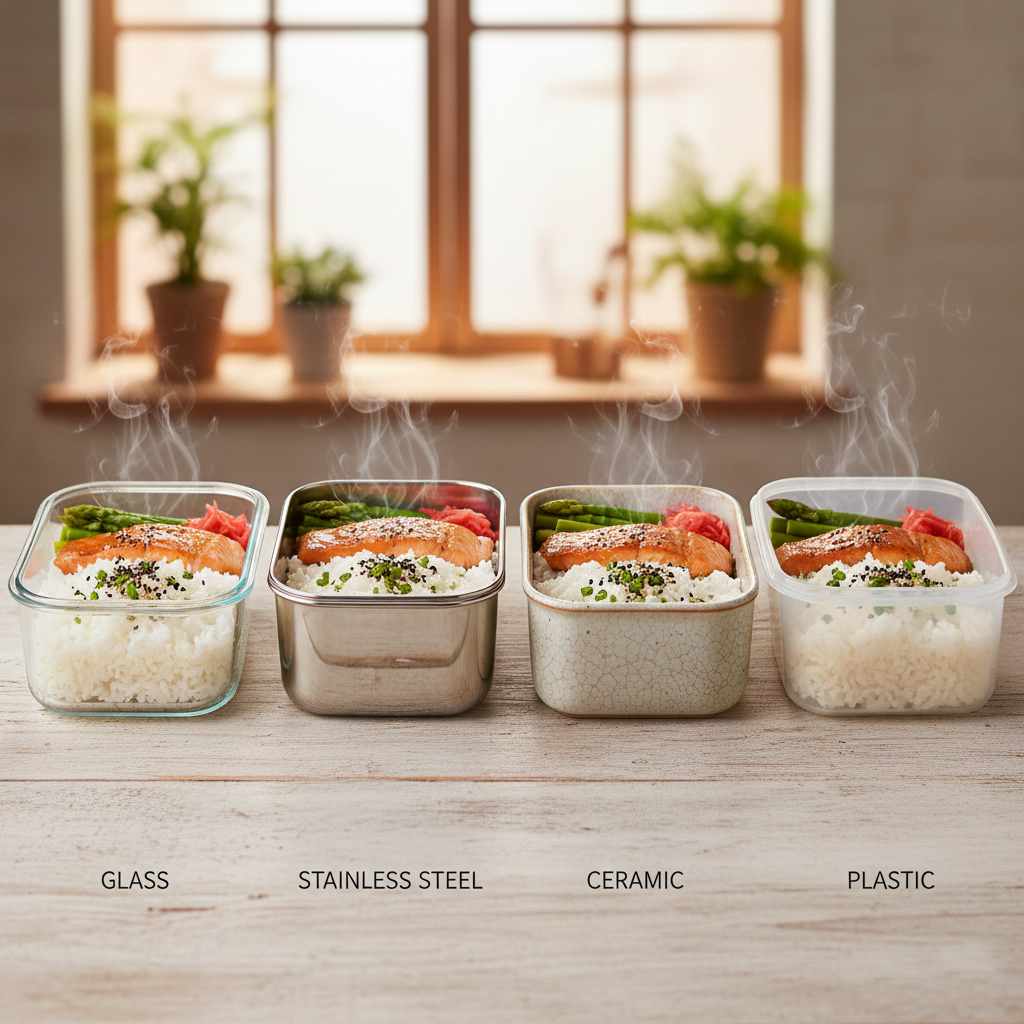
IV. High Borosilicate vs Other Lunch Box Materials
Selecting the right lunch box material requires balancing safety, durability,
convenience, and long-term performance. While plastic, stainless steel, ceramic,
and glass are all widely used, their behavior under real-life conditions
varies dramatically.
Below is a detailed, performance-driven comparison that highlights why
high borosilicate glass stands apart as the most versatile and reliable choice
for modern meal prep and daily food storage.
Performance Factor
Plastic
Stainless Steel
Ceramic
High Borosilicate Glass
Food Safety
Moderate; risk of chemical migration under heat
High; inert and stable
High if glazed properly; risk with low-quality coatings
Very high; chemically inert, non-toxic, zero leaching
Microwave Compatibility
Limited; deformation and chemical release possible
Not microwave safe
Limited; uneven heating and cracking risk
Excellent; designed for repeated heating cycles
Thermal Shock Resistance
Low
Not applicable
Moderate
Very high; freezer → microwave → oven safe
Odor & Stain Retention
High; porous structure absorbs oils and pigments
Very low
Low; glaze degradation over time possible
None; non-porous, hygienic surface
Durability
Low; scratches, warps, short lifespan
Very high; impact-resistant
Moderate; brittle under impact
High; stable, long-term structural integrity
Typical Lifespan
3–12 months
3–5 years
2–4 years
5–10+ years
Environmental Impact
High; plastic waste & microplastic pollution
Moderate; recyclable, long lifespan
Moderate; energy-intensive production
Low; durable, recyclable, eco-friendly
Overall Performance
Low to moderate
High for cold meals
Moderate
Excellent; most balanced solution
While each material has its place, high borosilicate glass delivers the most balanced
combination of safety, performance, durability, and convenience.
It is uniquely capable of handling the demands of modern lifestyles,
from meal prepping and office reheating to freezer storage and dishwasher cleaning.
For brands, distributors, and foodservice buyers seeking a premium yet practical solution,
high borosilicate glass represents a long-term investment in product quality,
customer satisfaction, and sustainability.
V. Common Myths About Glass Lunch
Boxes
Despite their growing popularity, glass lunch boxes are still surrounded by several common
misconceptions.
These myths often discourage users from switching to healthier and more sustainable food
storage solutions.
Below, we address and clarify the most frequent misunderstandings with scientific facts and
real-world usage data.
Myth 1: Glass Lunch Boxes Break Easily
Many people assume that all glass containers are fragile and unsuitable for daily use. In
reality, high
borosilicate glass is engineered for high mechanical strength and superior thermal shock
resistance.
Compared with ordinary soda-lime glass, high borosilicate glass offers significantly
enhanced durability and
impact resistance, making it suitable for frequent handling, transport, and temperature
changes.
Myth 2: Glass Lunch Boxes Are Too Heavy to Carry
While glass is heavier than plastic, modern high borosilicate lunch boxes are designed with
optimized wall
thickness to balance strength and weight.
For most daily commuting, meal prep, and office use, the weight difference is minimal and
fully acceptable,
especially considering the major benefits in food safety, durability, and long-term
usability.
Myth 3: Glass Containers Are Not Microwave or Oven Safe
This misconception mainly comes from experiences with ordinary glass. High borosilicate
glass, however, is
specifically engineered to withstand extreme temperature changes and high heat exposure.
Quality high borosilicate lunch boxes are safe for microwave, oven, freezer, and dishwasher
use when proper
guidelines are followed.
Myth 4: Glass Lunch Boxes Leak Easily
Leakage is not determined by the glass body itself, but by the quality of sealing components
such as lids,
gaskets, and locking mechanisms.
High-quality glass lunch boxes equipped with food-grade silicone seals and precision-fitted
locking lids can
achieve excellent leak-proof performance, making them suitable for soups, sauces, and
liquid-based meals.
Myth 5: Glass Lunch Boxes Are Not Suitable for Meal Prep
On the contrary, glass containers are among the best choices for meal preparation due to
their ability to move
seamlessly from freezer to microwave to dishwasher.
Their transparency also allows for easy food identification, portion control, and organized
storage, making
meal prep more efficient and hygienic.
Fact Summary
High borosilicate glass is strong, durable, and
thermal shock resistant
Modern designs balance durability and portability
Properly engineered glass lunch boxes are microwave,
oven, freezer, and dishwasher safe
Leak-proof performance depends on lid and seal design,
not glass material
Glass is ideal for meal prep, storage, and reheating
By understanding the facts behind these myths, consumers and buyers can make informed
decisions and fully
appreciate the long-term value and performance advantages of high borosilicate glass lunch
boxes.
VI. How to Use High
Borosilicate Lunch Boxes Correctly
Although high borosilicate glass is designed for excellent heat resistance and durability,
proper daily usage
plays a critical role in extending product lifespan and maintaining long-term performance.
By following
correct usage practices, users can fully unlock the advantages of this premium material.
Avoid Sudden Extreme Temperature Changes
High borosilicate glass offers superior thermal shock resistance, but abrupt temperature
transitions should
still be avoided whenever possible. For example, placing a frozen container directly into a
fully preheated
oven or rinsing a hot container under cold water may increase thermal stress and shorten
product life.
Allow gradual temperature transitions when reheating or cooling, and avoid extreme
hot-to-cold or cold-to-hot
changes to maximize durability.
Remove or Vent Lids During Heating
When reheating food in microwaves or ovens, lids should always be removed or properly vented
to prevent pressure
buildup. Sealed containers may trap steam, creating internal pressure that could affect lid
performance and
long-term sealing reliability.
Use microwave-safe vented lids or loosely cover the container when heating to ensure safe
pressure release.
Use Gentle Cleaning Methods
High borosilicate glass has a non-porous surface that naturally resists stains and odors,
requiring only mild
cleaning. Soft sponges and gentle detergents are sufficient for daily maintenance.
Avoid steel brushes, abrasive pads, or harsh chemicals that may scratch the surface or
degrade lid components
over time.
Store and Transport Properly
While highly durable, glass containers should still be handled with care during storage and
transport. Use
padded lunch bags, avoid stacking heavy items on top, and ensure stable placement to
minimize accidental impact.
VII. Who Should Choose
High Borosilicate Lunch Boxes?
High borosilicate lunch boxes are designed for users who demand superior safety,
performance, and long-term
value. They are especially well-suited for the following groups:
Office Professionals
Frequent microwave reheating at work
Preference for odor-free, stain-resistant containers
Clean and professional food storage presentation
Meal Prep Enthusiasts & Fitness Users
Batch cooking and portion control
Freezer-to-microwave functionality
High hygiene standards
Families & Health-Conscious Consumers
Concern about plastic chemical exposure
Safe food storage for children
Long-term durability and sustainability
Eco-Conscious Buyers
Plastic-free lifestyle preference
Reusable and recyclable materials
Lower environmental footprint
Retailers, Importers & Private Label Brands
Premium product positioning
Strong global market demand
High perceived value for brand building
VIII. Why Feemio's
High Borosilicate Lunch Boxes Stand Out
At Feemio, we combine advanced glass engineering, modern manufacturing technology, and
strict quality control
systems to deliver professional-grade high borosilicate lunch box solutions for global
markets.
Premium High Borosilicate Raw Materials
We use carefully selected high borosilicate glass with optimized chemical composition and
thermal expansion
coefficients to ensure exceptional thermal shock resistance, mechanical strength, and
long-term stability.
Advanced Manufacturing Process
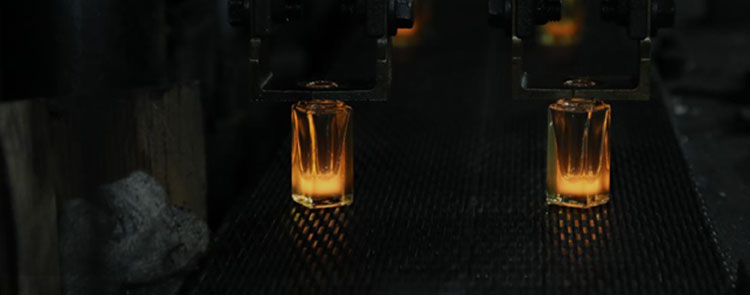
Our production process includes high-precision molding, uniform wall thickness control,
reinforced edges,
and multi-stage annealing to eliminate internal stress and maximize structural durability.
Strict Quality Inspection System
Each batch undergoes comprehensive quality testing, including thermal shock tests, drop
resistance tests,
leak-proof sealing verification, and food-contact safety compliance inspections.
Complete OEM & ODM Customization Capability
We provide full customization services, including custom shapes, capacities, logo branding,
packaging design,
and private label development to support brand differentiation and market competitiveness.
Global Compliance Certifications
Feemio products comply with major international food safety regulations, including FDA,
LFGB, DGCCRF, and EU
food contact standards, ensuring smooth market entry across North America, Europe, and other
global regions.
IX. Conclusion
Selecting the right lunch box material is no longer a matter of convenience alone — it
directly affects food
safety, daily usability, environmental sustainability, and long-term cost efficiency.
Among all available options, high borosilicate glass clearly delivers the most balanced
combination of safety,
thermal performance, durability, and eco-friendliness, making it the optimal solution for
modern food storage.
Whether you are an individual consumer seeking healthier daily meals or a brand looking to
build premium product
lines, high borosilicate glass lunch boxes offer a future-proof investment.
At Feemio, we are committed to providing world-class glass container solutions that help our
partners succeed in
competitive global markets.
Coco Hu is the Business Director, recognized for her expertise
in
client
relationship management and end-to-end project coordination within the global
glassware market.
She specializes in translating complex client requirements into actionable
manufacturing
solutions, ensuring seamless communication and high-quality delivery. Through
her
articles, Coco
shares practical advice on sourcing logistics, product customization, and
navigating
international trade regulations to help partners streamline their supply chain
operations.