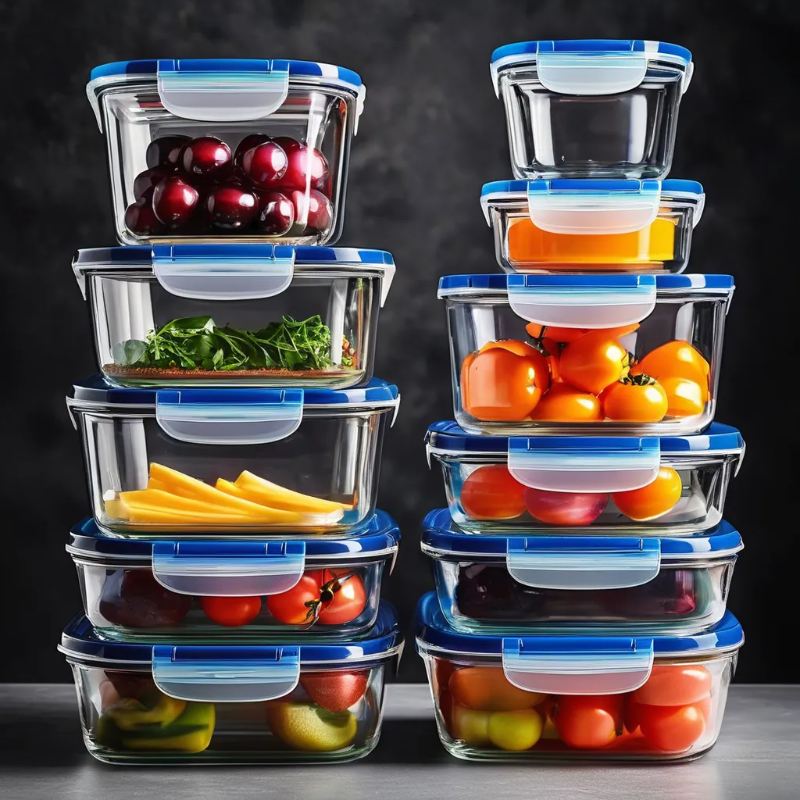
Why do some glass lunch boxes shatter while others don’t?

Coco | 2026-04-02

Glass lunch boxes shatter
Consult Our Glass Experts

Why Do Some Glass Lunch Boxes Shatter While Others Don’t? (Quick Answer)

Glass lunch boxes shatter due to a combination of material properties, thermal stress, and manufacturing quality. The most critical factors include the type of glass (borosilicate vs. soda-lime), resistance to thermal shock, thickness and stress distribution, and hidden defects introduced during production.

In real-world use, sudden temperature changes—such as moving a container from the freezer to a microwave or oven—are the most common trigger. Glass with a high thermal expansion coefficient, like soda-lime glass, generates internal stress much faster under these conditions, making it more prone to cracking or shattering. In contrast, borosilicate glass is engineered to withstand extreme temperature differences, which is why it is widely used in high-performance kitchenware and laboratory applications.

Borosilicate vs. Soda-Lime

Not All Glass Is the Same: Borosilicate vs. Soda-Lime

Borosilicate Glass: Engineered for Extreme Conditions

Borosilicate glass is specifically designed to perform under thermal and mechanical stress. Its composition includes silicon dioxide (SiO₂) and boron trioxide (B₂O₃), which fundamentally strengthens the molecular network and reduces thermal expansion.

With a very low coefficient of thermal expansion (approximately 3.3 × 10⁻⁶/K), borosilicate glass can tolerate rapid temperature changes without generating excessive internal stress. This makes it the preferred material for oven-safe containers, laboratory glassware, and high-end cookware.

In practical terms, borosilicate glass can safely transition between extreme environments—such as from a freezer to a preheated oven—without shattering under normal conditions.

Soda-Lime Glass: Cost-Effective but Less Stable

Soda-lime glass is the most widely used glass type, accounting for roughly 90% of global glass production. It is made from silicon dioxide, sodium oxide (Na₂O), and calcium oxide (CaO), making it inexpensive and easy to manufacture.

However, its higher thermal expansion coefficient (around 9.0 × 10⁻⁶/K) makes it significantly more vulnerable to temperature fluctuations. To improve its strength, manufacturers often apply a tempering process, which introduces compressive stress on the surface.

While tempered soda-lime glass performs well against physical impact, it does not fundamentally solve thermal instability. In addition, internal impurities such as nickel sulfide (NiS) inclusions can lead to rare but unpredictable spontaneous breakage over time.

This difference in material composition is the number one reason why some glass lunch boxes shatter while others don’t.

borosilicate-lunch-box

The Real Reason: Thermal Shock and Internal Stress

What Is Thermal Shock?

Thermal shock refers to the stress generated inside a material when it experiences a rapid temperature change. Glass is particularly sensitive to this because it is a poor conductor of heat, meaning temperature changes do not distribute evenly across its structure.

Why Glass Shatters Under Temperature Change

When a glass container is suddenly heated or cooled, different parts of the material expand or contract at different rates. For example, pouring hot liquid into a room-temperature container causes the inner surface to expand quickly, while the outer surface remains relatively cool.

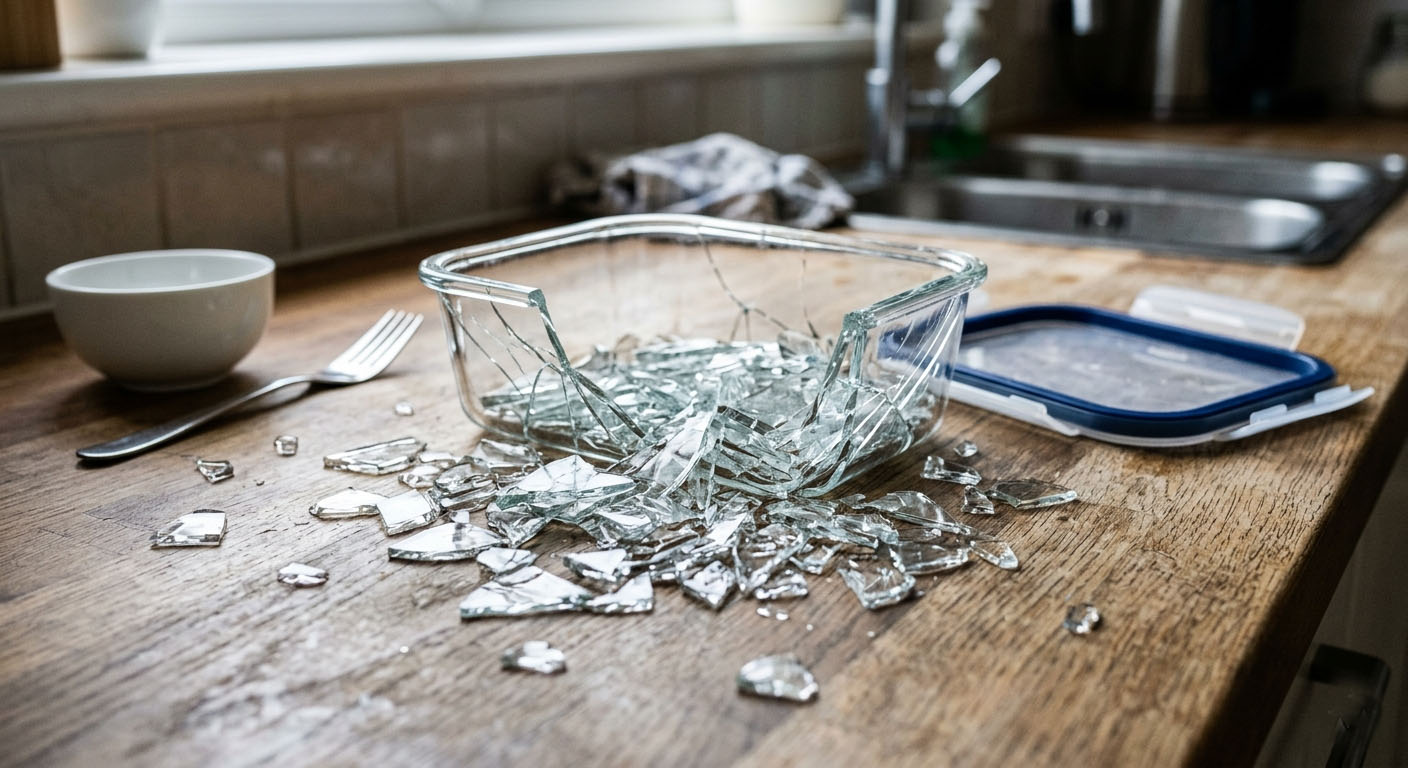
This mismatch creates internal stress: the inner layer is compressed, while the outer layer is stretched. Glass is strong under compression but extremely weak under tension. Once the tensile stress exceeds the material’s fracture limit, even microscopic flaws can rapidly propagate into visible cracks or complete shattering.

Common Thermal Shock Scenarios


  • Moving a container directly from the freezer to a microwave or oven
  • Placing a hot glass dish onto a cold or wet countertop
  • Rinsing a hot container under cold water
  • Uneven heating in a microwave due to inconsistent food distribution

The severity of thermal shock is closely related to the material’s thermal expansion coefficient. Because borosilicate glass expands much less than soda-lime glass, it generates significantly lower internal stress under the same temperature difference—making it far more resistant to sudden breakage.

In fact, most real-world glass shattering cases are caused by thermal shock rather than impact.

High-quality glass lunch boxes

Thickness Matters More Than You Think

Many consumers assume that thicker glass automatically means stronger and safer performance. In reality, the relationship between thickness and durability is far more complex—especially when thermal stress is involved.

The Ideal Thickness Range

High-quality glass lunch boxes are typically manufactured with wall thicknesses between 3mm and 6mm. This range provides a balanced combination of mechanical strength, heat retention, and resistance to everyday impact.

Why Thicker Isn’t Always Better

While thicker glass can improve resistance to drops or external force, it also slows down heat transfer. This creates a larger temperature difference between the inner and outer layers during heating or cooling, which significantly increases internal stress.

In other words, excessively thick glass may actually be more prone to thermal shock failure under rapid temperature changes.

Uniformity Is More Important Than Thickness

The most critical factor is not thickness itself, but how evenly it is distributed. Uneven glass walls—such as a thicker base and thinner sides—create stress concentration points where cracks are more likely to initiate.

High-end manufacturing processes tightly control thickness tolerance to ensure consistent stress distribution across the entire container. This is a key indicator of product quality that is often overlooked by buyers.

borosilicate-lunch-box

Manufacturing Quality: The Hidden Factor Behind Glass Failure

Not all glass failures occur during obvious misuse. In many cases, shattering can happen unexpectedly—even when the container is sitting unused. These incidents are usually linked to invisible defects introduced during manufacturing.

Annealing: Releasing Internal Stress

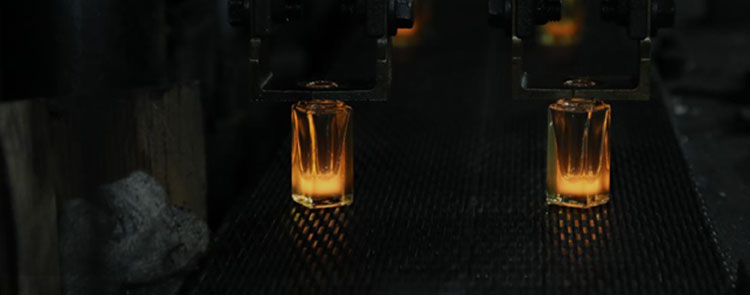
Annealing is a critical cooling process used to eliminate internal stress formed during glass shaping. If this process is rushed or improperly controlled, residual stress remains trapped inside the material.

Over time, even minor external forces—such as small impacts, washing vibrations, or temperature changes—can combine with these internal stresses and lead to sudden failure.

Nickel Sulfide Inclusions (NiS): The Cause of Spontaneous Breakage

In tempered soda-lime glass, microscopic nickel sulfide particles can become trapped during production. These inclusions may remain stable initially, but can slowly change structure over time, expanding in volume.

Because they are often located in high-stress internal stress zones within the glass (center tension zones), even a small expansion can trigger explosive, unpredictable shattering without warning.

Micro-Cracks and Surface Damage

Surface imperfections—such as micro-cracks, scratches, or shear marks from cutting processes—act as weak points in the glass structure. While invisible at first, these defects grow under repeated heating and cooling cycles.

Eventually, they become the origin point for catastrophic cracking, especially under thermal stress conditions.

This is why two glass containers that look identical can perform completely differently in real-world use.

borosilicate-lunch-box

Design & Structure Also Play a Role

Beyond material and manufacturing, the physical design of a glass lunch box significantly influences its durability. Geometry determines how stress is distributed throughout the structure under both mechanical and thermal loads.

Compartment Designs Increase Risk

Glass containers with internal dividers are popular for meal prep, but they introduce structural complexity. The connection points between compartments and the base often create uneven thickness and stress concentration zones.

Additionally, smaller compartments can lead to uneven heating in microwaves, increasing localized thermal stress.

Rounded Corners vs. Sharp Edges

Sharp corners are natural stress concentrators. Under load, stress tends to accumulate at these stress concentration points, making them more likely to crack.

High-quality glass containers use rounded (filleted) corners and reinforced edges to distribute stress more evenly and improve resistance to both impact and thermal shock.

Stacking Stability and Load Distribution

Well-designed containers ensure that weight is distributed through structurally strong structurally reinforced areas rather than weak points like lids or thin edges. Features such as reinforced rims or stackable contours help reduce direct glass-to-glass contact, minimizing the risk of chipping.

In short, good design doesn’t just improve usability—it directly reduces the risk of glass failure.

borosilicate-lunch-box

How to Tell If a Glass Lunch Box Is Safe

Choosing a safe and durable glass lunch box requires more than just checking the appearance. Buyers should evaluate material composition, manufacturing quality, and compliance with international standards.

Quick Safety Checklist


  • ✔ Is it made from borosilicate glass?
  • ✔ Is it labeled as oven-safe and heat-resistant?
  • ✔ Is the wall thickness uniform across all sides?
  • ✔ Are the edges smooth and rounded (no sharp corners)?
  • ✔ Does the supplier provide quality certifications?

Key Certifications to Look For

Reliable glass containers often comply with recognized international standards:


  • FDA (21 CFR): Ensures the material is safe for food contact and non-toxic.
  • LFGB: A stricter European standard that also tests odor and taste neutrality.
  • ISO 7086: Controls the release limits of heavy metals such as lead and cadmium.
  • EN 1183: Verifies resistance to thermal shock under extreme conditions.

Products that meet these standards are more likely to deliver consistent performance and long-term safety.

borosilicate-lunch-box

Common Mistakes That Cause Glass to Shatter

Even high-quality glass can fail if used incorrectly. Most real-world breakage cases are linked to avoidable user mistakes.


  • Sudden temperature changes: Moving directly from freezer to oven or microwave
  • Placing hot glass on cold or wet surfaces: Causes rapid localized cooling
  • Using non-oven-safe glass in high heat: Exceeds material limits
  • Uneven microwave heating: Creates localized hot spots and stress
  • Heating with lid on: Trapped steam increases internal pressure
  • Using abrasive cleaners: Scratches weaken the surface over time
  • Direct flame exposure: Not all glass is flame-resistant

Avoiding these common mistakes can significantly reduce the risk of unexpected glass failure.

Borosilicate vs. Regular Glass: Final Verdict

When comparing borosilicate glass with standard soda-lime glass, the difference becomes clear across all critical performance dimensions.


  • Thermal resistance: Borosilicate handles extreme temperature changes with ease
  • Safety: No risk of spontaneous breakage from nickel sulfide inclusions
  • Durability: Better long-term resistance to chemical and thermal degradation
  • Clarity over time: Less prone to clouding or surface etching

While borosilicate glass may have a higher upfront cost, its longer lifespan and superior performance make it a more cost-effective and reliable choice in the long run.

If safety and durability matter, borosilicate glass is the clear winner.

Conclusion: What Really Determines Glass Safety

Glass lunch box durability is not determined by a single factor, but by a combination of material science, manufacturing precision, and proper usage.

To minimize risk and ensure long-term performance, buyers should prioritize:


  • High-quality borosilicate glass material
  • Uniform thickness and well-balanced structural design
  • Reliable manufacturing processes with proper annealing
  • Certified compliance with international safety standards
  • Correct daily usage and maintenance habits

For brands and bulk buyers, selecting a trusted manufacturer with strict quality control and transparent testing standards is essential to reducing product failure rates and protecting brand reputation.

By understanding the science behind glass behavior, you can make smarter purchasing decisions—and fully benefit from glass as one of the safest, most sustainable food storage materials available today.

Coco Hu

Coco Hu is the Business Director, recognized for her expertise in client relationship management and end-to-end project coordination within the global glassware market. She specializes in translating complex client requirements into actionable manufacturing solutions, ensuring seamless communication and high-quality delivery. Through her articles, Coco shares practical advice on sourcing logistics, product customization, and navigating international trade regulations to help partners streamline their supply chain operations.

Consult Our Glass Packaging Experts

Related Blog

Category
Get in Touch
Submit