Some glass lunch boxes leak even with silicone lids because the seal is not only about the
silicone itself.
A leakproof result depends on how well the entire sealing system works together, including
the lid structure,
gasket quality, locking pressure, and glass rim precision.
While silicone is flexible and widely used for sealing, it does not automatically create a
perfect barrier.
If the pressure is uneven, the gasket does not fit tightly, or the container is exposed to
movement or
pressure changes, small gaps can form and allow liquid to escape.
In real-world use, leakage often happens when containers are tilted, overfilled, or exposed
to temperature
changes. These situations increase internal pressure or reduce sealing contact, making even
small design
weaknesses more noticeable.
In short, a silicone lid alone does not guarantee a leakproof container—it is the
overall engineering
of the sealing system that determines performance.
The Common
Expectation vs. Reality of Silicone-Sealed Glass Containers
Many consumers believe that a glass container with a silicone lid is automatically
leakproof. This assumption
comes from the reputation of silicone as a flexible, durable, and food-safe material.
However, in engineering
terms, the presence of silicone alone does not guarantee a reliable seal.
The key misunderstanding lies in the difference between “leak-resistant” and “leakproof.”
Leak-resistant
containers are designed to reduce spills during normal, upright use, such as storing dry
food or carrying
light sauces. In contrast, truly leakproof containers must perform under more demanding
conditions, including
tilting, shaking, and pressure changes.
In daily use, these differences become clear. For example, when a container filled with soup
is placed inside
a bag, the liquid applies pressure to one side of the seal. If the sealing force in that
area is not strong
enough, even a small gap can allow leakage. Similarly, temperature changes—such as hot food
cooling down—can
create internal pressure differences that weaken the seal.
From an engineering perspective, sealing performance is not determined by a single material,
but by the
interaction of multiple factors, including gasket elasticity, lid rigidity, locking force,
and glass rim
flatness. If any one of these elements is not properly controlled, the overall seal can
fail.
In reality, silicone improves sealing performance, but it does not guarantee it. A
leakproof container
requires a complete and well-designed sealing system.
How
Silicone Lids Actually Work (Sealing Mechanism Explained)
To understand why leakage happens, it is important to first understand how a silicone lid is
supposed to
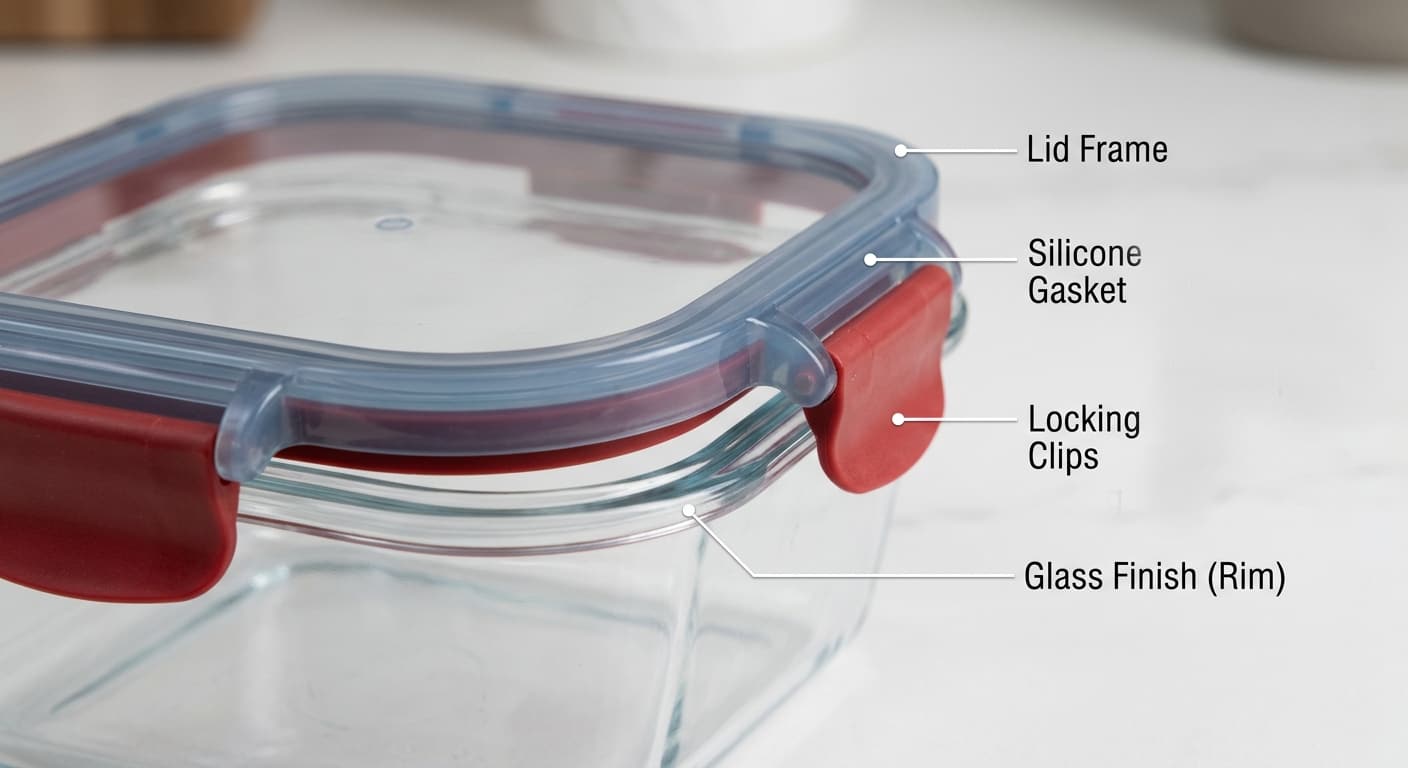
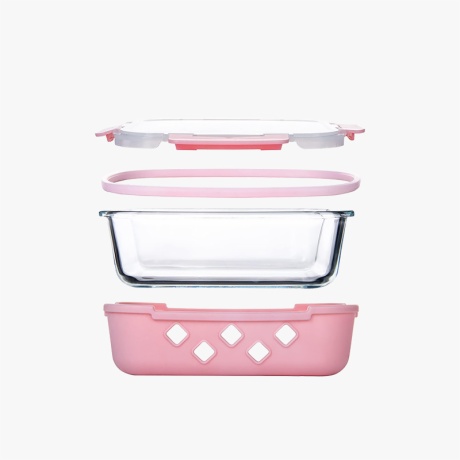
create a seal. In most glass lunch boxes, the sealing system is not a single component, but
a combination
of three key parts: the lid frame, the silicone gasket, and the locking mechanism.
The silicone gasket acts as a static seal. This means it works between two non-moving
surfaces—the lid and
the glass rim. When the lid is closed and locked, the gasket is compressed against the rim,
filling in tiny
surface irregularities and blocking any path for air or liquid to pass through.
This process is known as compression sealing. The effectiveness of this seal depends on how
evenly and how
firmly the silicone is pressed. If the pressure is too low, the gasket cannot fully close
microscopic gaps.
If the pressure is uneven, some areas will seal properly while others remain vulnerable to
leakage.
Three key factors determine whether this sealing mechanism works correctly:
Contact Pressure: The locking clips must apply enough and evenly
distributed force to
compress the gasket around the entire rim.
Gasket Elasticity: The silicone must be flexible enough to adapt to
small surface
variations, while still maintaining its shape and rebound over time.
Surface Precision: The glass rim must be flat and smooth so the gasket
can form a
continuous seal without gaps.
If any of these factors are not properly controlled, the sealing system becomes unreliable.
For example, a
soft gasket may shift under pressure, a rigid lid may not distribute force evenly, or a
slightly uneven rim
may prevent full contact in certain areas.
Sealing Component
Primary Engineering Function
Critical Performance Metric
Lid Frame
Provides structural rigidity and supports the gasket channel.
Flexural modulus; resistance to bowing under pressure.
Silicone
Gasket
Conforms to surface irregularities to create a hermetic barrier.
Compression set; Shore A durometer (40–60).
Locking Clips
Applies the mechanical load required to deform the gasket.
Clip tension consistency; cycle life (500+ cycles).
Glass Finish
(Rim)
Serves as the mating surface for the gasket.
Flatness tolerance (±0.1mm to ±0.2mm).
In simple terms, silicone does not “block” leaks by itself—it only works when it is
properly compressed
within a well-designed sealing system.
Top Reasons Why Glass Lunch Boxes Leak (Even with Silicone Lids)
Even when a container uses a silicone gasket, leakage can still occur due to multiple
engineering and
manufacturing factors. In most cases, the problem is not caused by a single defect, but by
small weaknesses
in the overall sealing system.
Below are the most common reasons why glass lunch boxes fail to remain leakproof in
real-world use.
3.1 Poor Silicone Gasket Quality
Not all silicone materials perform the same. The quality of the gasket directly affects how
well it can
create and maintain a seal.
Low-quality silicone may be too hard, making it difficult to conform to the glass surface,
or too soft,
causing it to deform or shift under pressure. Over time, repeated use, high temperatures,
and dishwasher
cycles can also reduce elasticity, leading to gaps in the seal.
Result: Reduced sealing ability and increased risk of leakage during
movement or pressure changes.
3.2 Inconsistent Glass Rim or Warping
The glass rim plays a critical role as the contact surface for the gasket. If the rim is not
perfectly flat
or has slight warping, the silicone cannot form a uniform seal.
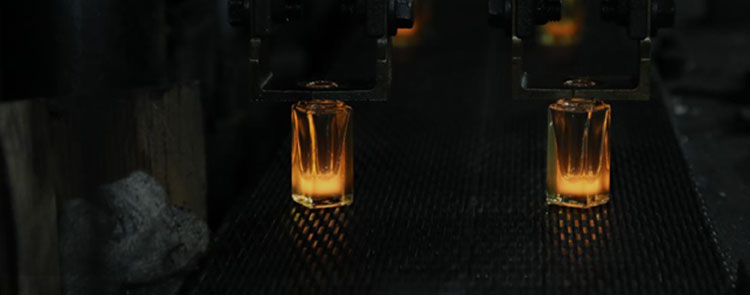
These issues often come from manufacturing processes such as uneven cooling or insufficient
annealing,
which introduce small distortions that are difficult to detect visually but significant for
sealing.
Result: Uneven contact pressure and micro gaps that allow liquid to escape.
3.3 Weak or Uneven Locking Mechanism
The locking system is responsible for applying the force needed to compress the silicone
gasket. If this
force is not strong or evenly distributed, the seal will not hold.
For example, containers with only two locking clips often create uneven pressure, while
poorly designed
clips may lose tension over time. This leads to areas where the gasket is not fully
compressed.
Result: Partial sealing and leakage, especially when the container is
tilted or shaken.
3.4 Lid Design Limitations
The structure of the lid itself also affects sealing performance. If the lid is too
flexible, it may bend
slightly when the clips are closed, reducing pressure in certain areas, especially in the
center.
In addition, a shallow gasket groove may not hold the silicone securely in place, allowing
it to shift
during use.
Result: Loss of consistent pressure and increased chance of seal failure
under real-world conditions.
3.5 Overfilling and Internal Pressure
Overfilling a container leaves no space for air, which increases internal pressure when the
contents move
or change temperature. Liquids, in particular, can push directly against the seal when the
container is
tilted.
Temperature changes can also create pressure differences inside the container, further
stressing the seal.
Result: Pressure forces liquid through weak points in the seal.
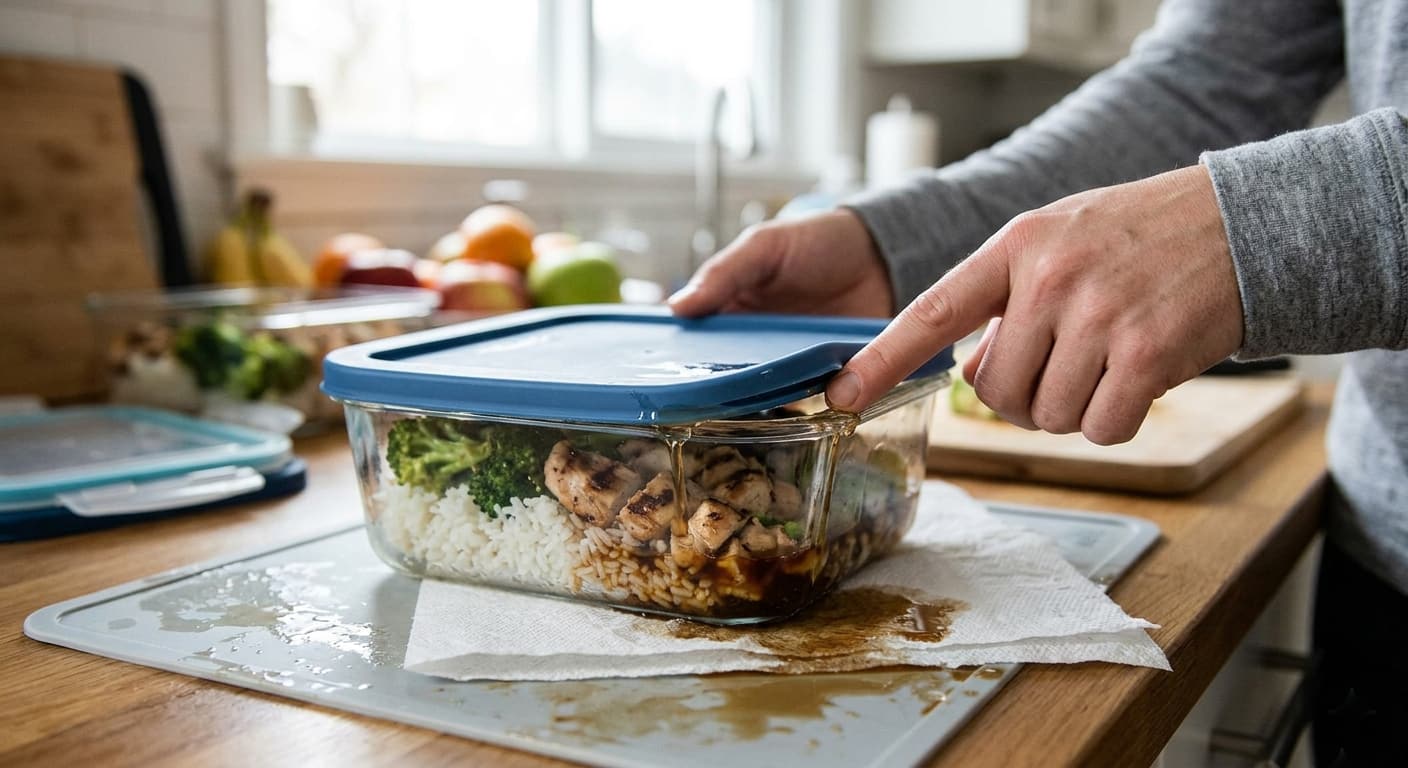
3.6 Improper Use or Misalignment
Even a well-designed container can leak if it is not used correctly. Common issues include
the gasket not
being properly seated, the lid not fully locked, or debris remaining on the sealing surface.
Small particles or misalignment can prevent full contact between the gasket and the glass,
creating an
immediate leak path.
Result: Leakage caused by incomplete sealing, even if the product design is
sound.
Overall, leakage is rarely caused by silicone alone. It is usually the result of
multiple small
issues in material quality, design, manufacturing, or usage working together.
Leakproof vs
Leak-Resistant: What Most Products Don’t Clearly Explain
One of the main reasons for confusion around leaking containers is the unclear use of the
terms
“leakproof” and “leak-resistant.” While they sound similar, they describe very different
levels of
performance.
In simple terms, leak-resistant containers are designed to reduce spills under normal
conditions, such as
being kept upright on a table or inside a refrigerator. They can handle light movement, but
are not built
to withstand strong pressure, shaking, or long periods of tilting.
Leakproof containers, on the other hand, are engineered to maintain a complete seal even
under more
demanding conditions. This includes being turned upside down, carried in a bag, or exposed
to pressure
changes during daily transport.
The challenge is that there is no universal standard that strictly defines these terms in
the consumer
market. As a result, some products labeled as “leakproof” may only perform well under basic
test conditions,
but fail in real-world use.
Feature
Leak-Resistant
Leakproof (Industrial Grade)
Pressure
Tolerance
≤ 5 PSI
≥ 15 PSI
Liquid
Retention
1–2 hours (Static)
24+ hours (Dynamic)
Testing
Protocol
Upright visual check
Inverted pressure / vacuum
tests
Airtightness
Basic odor barrier
ISO 7-grade airtightness
Primary Use
Solid food storage
Transporting liquids / soups
From an engineering perspective, the difference comes down to how much pressure the sealing
system can
handle and how stable it remains over time. A leak-resistant design may rely on light
contact pressure,
while a true leakproof system requires strong, evenly distributed compression and precise
component
alignment.
In practical terms, a container that works well on a flat surface may still leak when placed
in a backpack,
shaken during transport, or filled with hot liquid that creates internal pressure changes.
Understanding this difference helps explain why some glass lunch boxes leak even
when they appear
to have a secure silicone seal.
How to Identify a
Truly Leakproof Glass Lunch Box
Choosing a leakproof glass lunch box requires more than just checking for a silicone lid. As
explained
earlier, sealing performance depends on the entire system, including materials, structure,
and
manufacturing precision.
The following checklist highlights the key features and quality indicators that help
identify a reliable,
leakproof container.
5.1 Key Design Features
Thick and Elastic Silicone Gasket: A high-quality gasket should feel
flexible and
return to its original shape quickly after being pressed. This ensures consistent
sealing over time.
Deep Sealing Groove: The lid should have a well-defined groove that
securely holds
the gasket in place and prevents it from shifting during use.
4-Side Locking Clips: Multiple locking points help distribute pressure
evenly around
the rim, improving overall seal reliability.
Rigid Lid Structure: A reinforced lid reduces bending and helps
maintain uniform
pressure across the entire sealing surface.
5.2 Manufacturing Quality Indicators
Smooth and Flat Glass Rim: The sealing surface should be even and free
from visible
defects such as chips, rough edges, or distortion.
Consistent Fit Between Lid and Base: The lid should close tightly
without gaps or
looseness, indicating good dimensional control during production.
Stable Glass Material: High-quality glass with good thermal stability
helps maintain
rim precision over repeated heating and cooling cycles.
5.3 Simple Testing Methods
In addition to checking design and build quality, simple tests can help evaluate sealing
performance in
real use.
Inversion Test: Fill the container with water, close it properly, and
turn it upside
down for several minutes to check for leaks.
Shake Test: Gently shake the container to simulate movement during
transport.
Tilt Test: Place the container at an angle to observe whether liquid
escapes from
specific points.
These simple checks can reveal weaknesses that may not be obvious during normal use.
In summary, a truly leakproof container is defined by its overall design and build
quality—not just
the presence of a silicone lid.
How to Prevent Leakage in Daily
Use
Even a well-designed glass lunch box can leak if it is not used properly. In many cases,
small usage
mistakes reduce the effectiveness of the sealing system and create conditions where leakage
becomes more
likely.
By following a few simple practices, users can significantly improve sealing performance and
reduce the
risk of leaks in everyday situations.
6.1 Avoid Overfilling
Leaving some empty space inside the container is important, especially when storing liquids.
When a
container is completely full, any movement or temperature change can increase internal
pressure and push
liquid directly against the seal.
Best practice: Leave a small headspace to allow for expansion and pressure
changes.
6.2 Check the Gasket Before Closing
Before sealing the container, make sure the silicone gasket is properly seated in its
groove. If the gasket
is twisted, partially out of place, or damaged, it will not create a complete seal.
Best practice: Inspect the gasket quickly before each use to ensure correct
positioning.
6.3 Ensure the Lid is Fully Locked
Incomplete locking is a common reason for leakage. If one or more clips are not fully
secured, the pressure
applied to the gasket will be uneven, creating weak points in the seal.
Best practice: Press down evenly and confirm that all locking points are
fully engaged.
6.4 Keep Sealing Surfaces Clean
Small particles such as food residue, oil, or dust can prevent full contact between the
gasket and the
glass rim. Even minor contamination can create a path for liquid to escape.
Best practice: Clean both the gasket and the rim thoroughly and avoid
leaving any residue
before sealing.
6.5 Manage Temperature Changes Carefully
Rapid temperature changes can affect both the container and the seal. Hot food cooling down
may create
internal pressure differences, while sudden heating can expand air and liquids inside the
container.
Best practice: Allow very hot food to cool slightly before sealing, and
avoid extreme
temperature changes when possible.
6.6 Maintain the Silicone Gasket
Over time, silicone gaskets can wear out, lose elasticity, or develop small defects. This
reduces their
ability to maintain a tight seal.
Best practice: Check the gasket regularly for signs of wear and replace it
if it becomes
loose, brittle, or damaged.
In daily use, proper handling and maintenance are just as important as product
design in preventing
leakage.
Why
Material Choice Still Matters in Sealing Performance
While sealing performance depends on the entire system, the material of the glass container
still plays an
important supporting role. Different types of glass behave differently under temperature
changes and long-term use,
which can directly affect how well the seal performs over time.
The two most common materials used in glass lunch boxes are borosilicate glass and soda-lime
glass. Although
both can be used for food storage, their physical properties lead to different levels of
stability and durability.
7.1 Borosilicate Glass
Borosilicate glass is known for its low thermal expansion, which means it expands and
contracts less when
exposed to temperature changes. This stability helps the container maintain its shape,
especially around the
rim where sealing occurs.
Because the rim remains more consistent over time, the silicone gasket can maintain better
contact, resulting
in a more reliable seal even after repeated heating and cooling cycles.
Key advantage: Better dimensional stability and long-term sealing
consistency.
7.2 Soda-Lime Glass
Soda-lime glass is more commonly used due to its lower cost and easier manufacturing
process. However, it has
a higher thermal expansion rate, which means it is more sensitive to temperature changes.
Over time, repeated heating and cooling may cause slight deformation or changes in the rim
structure. Even
small variations can reduce sealing accuracy and increase the risk of leakage.
Key limitation: Lower stability under thermal stress, which may affect
long-term sealing performance.
Property
Soda-Lime Glass
Borosilicate Glass
Thermal Shock
Resistance
Low (∼40°C differential)
High (∼160°C differential)
Mechanical
Strength
Adequate for basic use
Superior scratch / impact
resistance
Rim Precision
Prone to warping over time
Highly stable dimensions
Best Use
Static refrigerator storage
Freezer-to-Oven; Professional meal
prep
7.3 Why This Matters for Leakage
Sealing systems rely on very small tolerances. Even minor changes in the flatness or shape
of the rim can
affect how evenly the gasket is compressed. Materials that maintain their structure better
will support more
consistent sealing over time.
This does not mean that all soda-lime glass containers will leak, but it does mean that
material choice,
combined with manufacturing quality, influences how reliable the seal remains after repeated
use.
In summary, material alone does not determine leakproof performance, but it plays a
key role in
maintaining the precision required for an effective seal.
Final Technical
Synthesis: Why Leakage Happens
Leakage in glass lunch boxes is rarely caused by a single factor. Instead, it is the result
of how multiple
engineering variables interact within the sealing system. Silicone, glass, and mechanical
structure must all
work together under consistent pressure to maintain a stable barrier.
When any part of this system is slightly out of balance—such as uneven gasket compression,
small rim
irregularities, or weak locking force—the seal becomes vulnerable. Under real-world
conditions like tilting,
vibration, or temperature changes, these small weaknesses become visible as leakage.
This explains why two products that look almost identical can perform very differently in
daily use. The
difference is not always visible, but it exists in the precision of manufacturing and the
consistency of
engineering control.
In short, leakage is a system-level outcome, not a single-material failure.
FAQ
Why does my glass lunch box leak only when it is tilted?
Tilting changes how liquid pressure is distributed inside the container. If the sealing
pressure is not
perfectly even, liquid will find the weakest point in the gasket and escape from that area.
Can silicone lids wear out over time?
Yes. Silicone gaskets gradually lose elasticity due to heat exposure, mechanical
compression, and repeated
washing cycles. Once the material loses rebound ability, sealing performance decreases.
Is a thicker silicone gasket always better?
Not necessarily. A gasket must have the right balance of thickness and elasticity. If it is
too thick or too
soft, it may not distribute pressure evenly, which can also lead to leakage.
Why do some containers leak even when they are new?
New containers can still leak if there are manufacturing issues such as uneven rims, poor
lid alignment, or
inconsistent locking pressure. These are structural problems, not usage-related issues.
Conclusion
Silicone lids improve sealing performance, but they are only one part of a more complex
system. Leakproof
performance depends on the combined quality of the gasket, lid design, locking mechanism,
glass rim
precision, and manufacturing control.
In real-world use, leakage usually occurs when small design or production tolerances
accumulate and are
amplified by movement, pressure, or temperature changes.
Understanding this system-level relationship helps explain why some glass lunch boxes
perform reliably while
others fail under similar conditions.
Ultimately, leakproof performance is not a feature of silicone alone—it is the
result of precision
engineering across the entire container system.
Coco Hu
10-YEAR GLASS INDUSTRY VETERAN
Thanks for reading.
I’m Coco Hu from FEEMIO, a professional glass packaging manufacturer and supplier with over 10 years of industry experience. We specialize in designing and producing high-quality glass packaging solutions for global brands, covering food & beverage, cosmetics, and industrial applications.
From standard containers to custom OEM/ODM projects, I help clients select the right materials, structures, and finishes to ensure optimal performance, durability, and cost efficiency across different markets.
If you are sourcing reliable glass packaging or comparing suppliers for a better quotation, feel free to reach out. I’m always happy to provide practical guidance and tailored solutions for your project.