When choosing a glass lunch box, most people focus on material—especially whether it is made from borosilicate glass. However, one critical factor is often overlooked: glass thickness. Thickness plays a key role in determining not only durability, but also heat resistance, safety, and overall performance in daily use.
A well-designed glass container is not simply “thicker” or “stronger.” Instead, it requires a precise balance between thickness, uniform structure, and material composition. Glass that is too thin may crack under thermal stress, while poorly engineered thick glass can develop internal tension and fail unexpectedly. This is why understanding thickness is essential when evaluating the true quality of a glass lunch box.
In this guide, we will break down how glass thickness affects oven safety, durability, weight, and long-term reliability. Whether you are sourcing products for your brand or selecting a reliable container for everyday use, this article will help you make a more informed and confident decision.
In the context of glass lunch boxes, thickness refers to the measurement of the glass walls and base, typically expressed in millimeters (mm). Most standard glass food containers range from approximately 3mm to 6mm in thickness, depending on their intended use, structural design, and material composition.
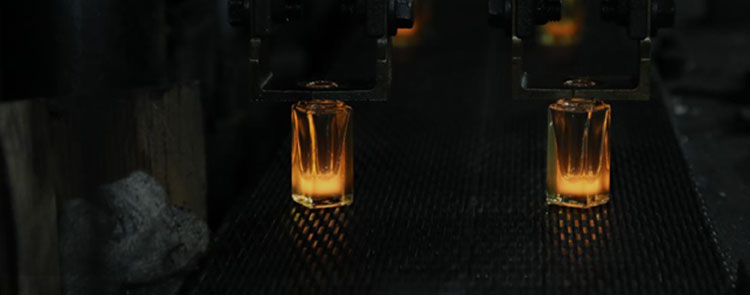
However, thickness alone does not define quality. A high-performance glass lunch box requires consistent and uniform thickness across all surfaces. Uneven glass distribution can create stress concentration points, which significantly increase the risk of cracking or shattering under heat or impact. This is why advanced manufacturing processes focus not only on thickness, but also on precision molding and quality control.
It is also important to understand the relationship between thickness, weight, and usability. Thicker glass generally offers better structural strength and heat retention, but it also increases product weight, which may affect portability for everyday use. On the other hand, thinner glass containers are lighter and easier to carry, yet they may sacrifice durability and resistance to thermal stress.
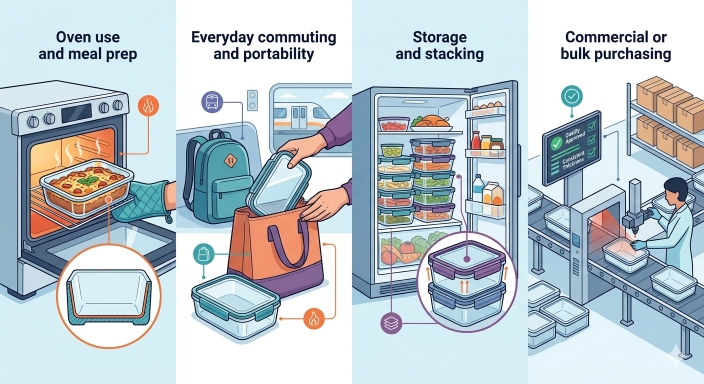
From a product selection perspective, the ideal thickness depends on the application scenario. For example, glass lunch boxes designed for oven use or meal prep tend to feature thicker and more robust construction, while containers intended for light daily use or transport may prioritize a more balanced, lightweight design.

One of the most important roles of glass thickness is its impact on heat resistance and oven performance. When a glass lunch box is exposed to high temperatures, heat must be distributed evenly across the surface. If the glass is too thin, it can develop localized hot spots, increasing the risk of cracking or sudden failure.
Thicker glass, when properly engineered, helps stabilize temperature distribution by slowing down how quickly heat transfers through the material. This reduces internal stress and allows the container to handle higher temperatures more safely. However, thickness alone is not enough—what truly matters is the combination of thickness and thermal shock resistance.
Thermal shock occurs when glass experiences rapid temperature changes, such as moving from a refrigerator directly into a hot oven. Even thick glass can fail under these conditions if it is not designed to absorb and redistribute stress effectively. This is why high-quality glass lunch boxes often use borosilicate glass, which expands and contracts more gradually than standard soda-lime glass.
In practical terms, a well-designed oven-safe glass container balances material composition, thickness, and structural uniformity. This combination ensures that the container can withstand both high temperatures and sudden changes without compromising safety. For buyers and product developers, understanding this relationship is key to selecting reliable glass lunch boxes that perform consistently in real kitchen environments.
Beyond heat performance, glass thickness plays a critical role in durability and impact resistance. In everyday use, glass lunch boxes are exposed to a variety of mechanical stresses—from accidental drops to stacking pressure during storage and transport. The ability of a container to withstand these forces largely depends on how its thickness is designed and distributed.
Thicker glass generally provides greater resistance to external impact, helping to absorb and disperse force more effectively. This is particularly important for high-risk areas such as corners and edges, where stress tends to concentrate. Well-designed glass lunch boxes often feature reinforced structures in these zones to minimize the likelihood of cracks or breakage.
However, durability is not simply about making the glass thicker. Excessive or uneven thickness can create internal stress points, which may weaken the structure over time. This is why balanced thickness and precise engineering are essential for achieving long-term reliability.
From a commercial perspective, durability directly impacts product returns, customer satisfaction, and brand reputation. Glass lunch boxes with optimized thickness are less likely to break during shipping or daily use, reducing damage rates and improving overall product performance across the supply chain.
While increased glass thickness improves strength and heat resistance, it also introduces an important consideration: weight. A thicker glass lunch box is naturally heavier, which can impact portability and everyday convenience—especially for users who carry meals to work, school, or outdoor settings.
This creates a practical trade-off between durability and usability. Heavier containers offer better protection against impact and thermal stress, making them ideal for oven use, meal prep, and long-term storage. In contrast, lighter glass lunch boxes are easier to carry and more suitable for daily commuting, but they may require more careful handling.
For product designers and buyers, the key is not to maximize thickness, but to optimize it based on the intended use case. A well-balanced glass lunch box should provide sufficient strength without compromising user comfort. This balance is often achieved through thoughtful design, such as reinforcing critical areas while maintaining a lighter overall structure.
Ultimately, the best glass lunch box is not simply the thickest or the lightest—it is the one that delivers the right combination of performance, safety, and convenience for its specific application.
When it comes to glass lunch boxes, safety is often associated with thickness—but this is only part of the story. In reality, uniform thickness and structural consistency are far more critical than simply making the glass thicker.
Glass that is too thin can be fragile and more prone to cracking under heat or impact. However, excessively thick glass that is unevenly distributed may develop internal stress during heating or cooling, increasing the risk of sudden breakage. These hidden stress points are often invisible but can significantly compromise safety over time.
This is why high-quality glass lunch boxes rely on precision manufacturing and strict quality control to ensure consistent wall thickness throughout the container. Advanced production techniques help minimize structural weaknesses, allowing the glass to expand and contract evenly when exposed to temperature changes.
Another important but often overlooked factor is the condition of the glass itself. Even a well-designed container can become unsafe if it has chips, scratches, or micro-cracks, as these imperfections can act as stress concentrators. Regular inspection and proper handling are essential for maintaining long-term safety.
Ultimately, true safety comes from a combination of balanced thickness, material quality, and manufacturing precision. Understanding these factors helps users and buyers avoid common risks and select glass lunch boxes that are not only durable, but also reliably safe in real-world use.
After understanding how thickness affects heat resistance, durability, and safety, the next step is choosing the right glass lunch box for your specific needs. Rather than looking for the thickest option available, it is more effective to select a container with optimized thickness based on its intended use.
In addition to thickness, always consider other key factors such as material type, lid design, and temperature ratings. A truly reliable glass lunch box is the result of balanced engineering, not a single specification.
By aligning product features with real usage scenarios, you can select glass lunch boxes that deliver better performance, improved safety, and long-term value—whether for personal use or for your business.
Despite its importance, glass thickness is often misunderstood. These common myths can lead to poor product choices and potential safety risks:
Understanding these misconceptions helps users make smarter decisions and avoid unnecessary risks when selecting glass lunch boxes.
Glass thickness is far more than a simple measurement—it is a key factor that influences heat resistance, durability, safety, and overall usability. As we’ve explored, the best glass lunch boxes are not defined by maximum thickness, but by balanced engineering, uniform structure, and high-quality materials.
Whether you are choosing a container for oven use, daily commuting, or commercial distribution, understanding how thickness works allows you to make more informed decisions. By considering real-world usage scenarios and avoiding common misconceptions, you can select products that deliver reliable performance and long-term value.
For businesses and buyers, investing in glass lunch boxes with optimized thickness and consistent manufacturing standards can significantly reduce breakage rates, improve customer satisfaction, and strengthen brand reputation.
Looking for high-quality glass lunch boxes with precise thickness control and reliable performance? Explore our solutions designed for durability, safety, and modern kitchen needs.